
- The Deepening AI Revolution: Beyond Smart to Sentient
- Hyper-Connectivity and the Immersive Metaverse
- Unveiling Stunning Future Innovations in Healthcare
- Sustainable Futures: Energy, Environment, and Beyond
- The Ethical Imperative and Shaping Tomorrow
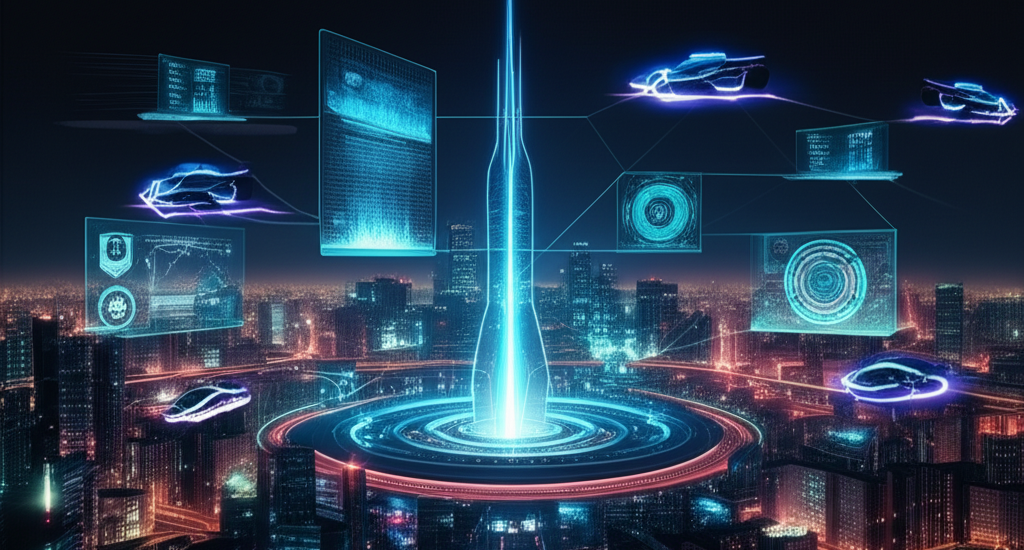
Stunning Future Innovations are poised to radically reshape every aspect of human existence, taking us beyond the realms of science fiction into a tangible future constructed by ingenuity and relentless progress. The pace of technological advancement is accelerating, promising a world brimming with possibilities that were once unthinkable. From personalized AI companions woven seamlessly into our lives to medical breakthroughs that redefine human longevity, the coming decades will unfold a tapestry of transformative changes. This article delves into some of the most captivating technological frontiers, exploring how they might evolve and profoundly impact our world.
The Deepening AI Revolution: Beyond Smart to Sentient
Artificial Intelligence (AI) has already emerged as a dominant force, but its future iterations promise an intelligence that is not merely fast but deeply contextual and adaptive. We are on the cusp of moving beyond narrow AI—systems designed for specific tasks—towards more generalized AI, capable of learning, understanding, and applying knowledge across a wide range of problems, much like human intellect.
Imagine AI that can:
Personalize Wellness: Beyond fitness trackers, future AI will analyze complex biological data, genetic predispositions, and lifestyle patterns to offer hyper-individualized health interventions, predicting illnesses before they manifest and optimizing nutritional intake and exercise routines with precision.
Catalyze Scientific Discovery: AI will become an indispensable partner in research, sifting through vast datasets, formulating hypotheses, and even designing experiments in fields like material science, astrophysics, and drug discovery, dramatically accelerating the pace of breakthroughs.
Empower Daily Life: From seamlessly managing our smart homes and transport to acting as truly intelligent personal assistants capable of anticipating needs and fluent in complex human dialogue, AI will integrate into the fabric of our existence, making interactions more intuitive and efficient.
The ethical considerations around bias, privacy, and control will naturally grow in importance, necessitating robust frameworks and regulations to guide AI’s development responsibly.
Hyper-Connectivity and the Immersive Metaverse
The current internet, revolutionary as it is, is merely a precursor to a future of ubiquitous, ultra-low-latency connectivity. With the advent of 6G and beyond, coupled with an explosion of Internet of Things (IoT) devices, our world will become a truly intelligent ecosystem where every object communicates seamlessly. This hyper-connectivity will fuel the ascent of the metaverse.
The metaverse isn’t just a virtual reality game; it’s envisioned as a persistent, interconnected network of 3D virtual worlds where users can socialize, work, shop, learn, and experience entertainment in immersive ways. Future advancements will include:
Photorealistic Avatars: Driven by advanced graphics and AI, avatars will become indistinguishable from real people, capable of mirroring subtle emotions and gestures.
Haptic Feedback & Sensory Immersion: Gloves, suits, and even neural interfaces will allow users to ‘feel’ virtual objects, experience temperature changes, and even limited olfactory sensations, blurring the lines between the physical and digital.
Economic Ecosystems: The metaverse will host vibrant economies powered by digital currencies and NFTs, where goods, services, and land ownership exist as digital assets.
This evolution will transform how we interact, learn, and earn, creating new industries and social paradigms.
Unveiling Stunning Future Innovations in Healthcare
Perhaps no sector stands to benefit more profoundly from future technological leaps than healthcare. The convergence of AI, biotechnology, and nanotechnology promises a golden age of medicine focused on prevention, personalization, and profound restoration.
Precision Medicine and Gene Editing: CRISPR and other gene-editing technologies will advance, allowing us to not only correct genetic defects responsible for inherited diseases but also enhance human capabilities, offering unprecedented control over our biological destiny. Personalized medicine, guided by individual genomic profiles and real-time biological data, will tailor treatments to be maximally effective with minimal side effects.
Nanobots for Internal Repair: Microscopic robots, some self-assembling or AI-controlled, could navigate the human body to deliver drugs precisely to cancerous cells, repair damaged tissues, clear arterial blockages, or even perform intricate surgeries from within, all with minimal invasiveness.
Advanced Brain-Computer Interfaces (BCIs): Beyond assistive technologies for paralysis, BCIs could enable direct communication between the human brain and computers, allowing us to control digital environments with thought, restore lost sensory functions, or even augment cognitive abilities. Imagine learning new skills or languages by direct brain upload, or experiencing shared consciousness in virtual spaces.
Organ Regeneration and Bio-Printing: Advances in stem cell research and 3D bio-printing could lead to the ability to grow replacement organs from a patient’s own cells, eliminating the need for organ donation and the risk of rejection.
Sustainable Futures: Energy, Environment, and Beyond
Addressing climate change and ensuring sustainable living for a growing global population demands radical innovation. Technology offers some of the most promising solutions.
Clean Energy Dominance: Fusion energy, long the holy grail, could become a reality, offering virtually limitless, clean power. Alongside advances in solar (e.g., highly efficient perovskite cells), next-generation battery storage, and smart grid technologies, we could see a world powered entirely by renewable, sustainable sources.
Carbon Capture and Geoengineering: Technologies to actively remove carbon dioxide from the atmosphere will become more efficient and scalable. Geoengineering solutions, while controversial, might offer methods to mitigate extreme climate effects.
Circular Economy Technologies: Advanced recycling, materials science innovations, and bio-manufacturing will create a truly circular economy, where waste is minimized, and resources are continually reused and repurposed.
Precision Agriculture and Lab-Grown Nutrition: Drones, AI, and IoT will optimize farming, reducing water and pesticide use while maximizing yields. Lab-grown meat and plant-based alternatives will become staple food sources, significantly reducing the environmental footprint of traditional agriculture.
The Ethical Imperative and Shaping Tomorrow
While the potential for stunning future innovations is immense, it’s crucial to acknowledge the accompanying ethical dilemmas and societal challenges. Questions surrounding data privacy, algorithmic bias, job displacement due to automation, the digital divide, and the very definition of humanity in an age of augmentation will demand careful consideration and proactive governance.
Ultimately, the future is not a predetermined path but a landscape shaped by human choices. The extraordinary technologies on the horizon offer an unparalleled opportunity to build a more equitable, sustainable, and prosperous world. By fostering responsible innovation, inclusive development, and robust ethical frameworks, we can ensure that these remarkable advancements serve the collective good, steering humanity towards a truly bright and astonishing future.

