
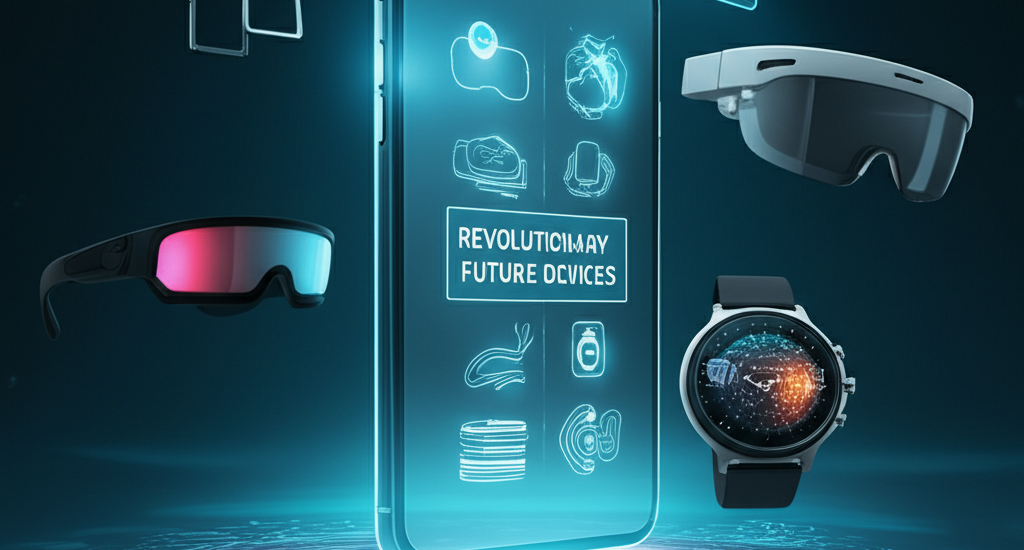
- Revolutionary Future Devices: A Glimpse into Tomorrow's Teknology
- The Ethical Imperatives of Advanced Teknology
- Embracing the Future
Teknology is not merely a buzzword; it’s the inexorable force reshaping our present and designing our future. We stand on the precipice of an era defined by devices so revolutionary they promise to redefine every facet of human existence – from how we live and work to how we heal and connect. Far beyond the smartphones and smartwatches of today, the next wave of innovation hints at a reality interwoven with seamless digital intelligence, transformative materials, and unprecedented capabilities.
The pace of scientific discovery and engineering marvels continues to accelerate, primarily fueled by advancements in artificial intelligence, quantum computing, biotechnology, and material science. These foundational shifts are enabling the creation of devices that were once confined to the realm of science fiction. The goal isn’t just incremental improvement, but a paradigm shift: building tools that are adaptive, intuitive, proactive, and deeply integrated into our environments and even our biology.
Revolutionary Future Devices: A Glimpse into Tomorrow’s Teknology
The coming decades will introduce a pantheon of devices designed to augment human potential, streamline daily life, and tackle some of the world’s most pressing challenges.
1. Hyper-Personalized Health & Bio-Integrated Devices:
Imagine a world where your health isn’t just monitored, but perpetually optimized. Future devices will transcend today’s wearables. We can anticipate bio-integrated sensors, perhaps embedded invisibly under the skin or within permanent contact lenses, that continuously track hundreds of biomarkers, predicting illnesses long before symptoms appear. Nano-robots, programmed with pinpoint precision, could deliver medicine directly to diseased cells, perform microscopic surgeries, or even repair damaged tissues from within. Beyond diagnostics, gene-editing tools, made safer and more accessible, might allow for personalized preventative interventions against genetic predispositions to diseases, truly revolutionizing healthcare from reactive to proactive.
2. Intelligent Living & Work Environments:
Our homes and workplaces will evolve into sentient spaces, driven by ambient intelligence. Beyond current smart home devices, future environments will feature predictive AI that understands your routines, preferences, and even emotional states. Walls could become dynamic displays, adapting to your mood or providing interactive information. Furniture might be reconfigurable on demand, and holographic interfaces could replace screens, allowing for truly immersive communication and collaboration. Energy efficiency will be paramount, with self-regulating systems that optimize resource consumption, even harvesting energy from ambient sources.
3. Augmented Reality Beyond the Screen:
While current AR/VR headsets offer a glimpse, future augmented reality devices will be far more discreet and powerful. Think smart contact lenses or even neural implants that seamlessly overlay digital information onto your real-world perception. These devices won’t just display data; they’ll enhance interaction with your environment, offering real-time language translation, navigation, contextual information about objects and people, or even allowing you to “see” data visualizations in your physical space. The line between the digital and physical will blur, creating an “internet of experiences” rather than just an internet of information.
4. Advanced Robotics and Autonomous Systems:
Robotics will move beyond industrial applications into pervasive personal and public service roles. Domestic robots will handle chores, provide companionship for the elderly, and assist individuals with disabilities. Autonomous vehicles will evolve beyond cars to include flying taxis (eVTOLs), self-managing public transport networks, and intelligent delivery drones that navigate complex urban environments with unprecedented efficiency. These robots will learn, adapt, and collaborate, becoming indispensable parts of our societal infrastructure.
5. Material Science Innovations:
The devices of tomorrow will be built from materials yet to be widely imagined. Self-healing polymers could extend the lifespan of products indefinitely. Programmable matter might allow objects to change shape or function on demand. Advanced composites and meta-materials will enable devices that are lighter, stronger, more energy-efficient, and capable of entirely new functionalities, such as invisibility cloaking or advanced energy harvesting.
The Ethical Imperatives of Advanced Teknology
As fascinating as these future devices are, their proliferation brings significant ethical and societal considerations. Questions around data privacy, security, and potential misuse of powerful technologies will become paramount. The risk of widening the digital divide, job displacement due to automation, and ensuring the equitable distribution of these advanced tools will require careful foresight and policy-making. Engaging with these challenges responsibly will be crucial to harnessing the full, positive potential of Teknology.
Embracing the Future
The journey towards these revolutionary devices is already underway. While the precise forms and functions may still be evolving, the core promise remains: a more intelligent, connected, and capable future. As individuals and societies, our task is to adapt, to cultivate digital literacy, critical thinking, and a proactive approach to ethical innovation. The next generation of devices will not just be tools; they will be partners in shaping our destiny, pushing the boundaries of what it means to be human.
Ultimately, the transformative power of tomorrow’s devices lies in their ability to empower us, solve global challenges, and unlock unprecedented levels of human potential. The future, rich with groundbreaking Teknology, is not just arriving; it’s being meticulously crafted, one revolutionary device at a time.

